Data Governance: Nobody’s Favorite, Everybody’s Challenge
Health plans have no shortage of data. From claims and clinical records to provider networks, member interactions, and operational performance, organizations have access to enormous amounts of information that can inform better decisions. Yet having more data doesn’t automatically translate to better outcomes.
Too often, valuable information is scattered across departments, managed through disconnected systems, or interpreted differently by teams each working toward their own distinct priorities.
That challenge was a central theme during a recent industry panel featuring leaders from health plans and healthcare technology organizations. While the discussion explored everything from clinical analytics to artificial intelligence, one key theme emerged repeatedly: The next leap forward in health plan intelligence may depend less on acquiring new data and more on improving how organizations govern, share, and act on what they already have.
When Every Team Has Its Own Source of Truth
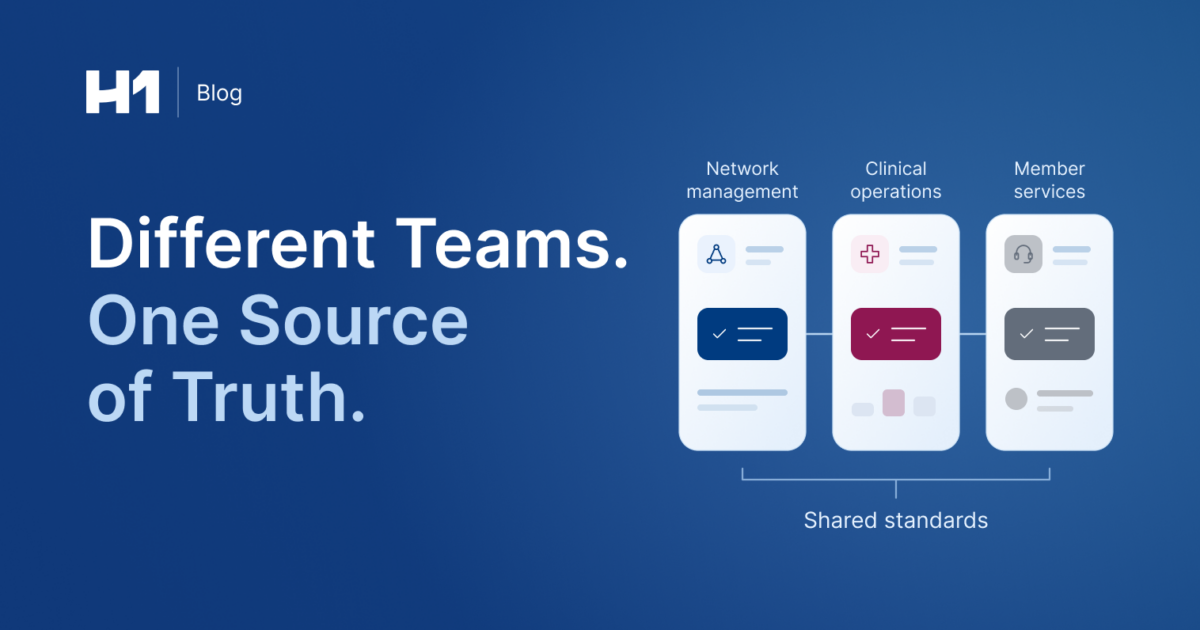
One of the biggest barriers to effective decision-making is the fragmentation of data across an organization. Different departments often rely on the same fundamental information but manage it independently. Network management, clinical operations, member services, and other business functions may each maintain their own data sources, apply different definitions, or establish processes tailored to their specific needs. While those differences may serve individual teams, they can create significant challenges at the enterprise level.
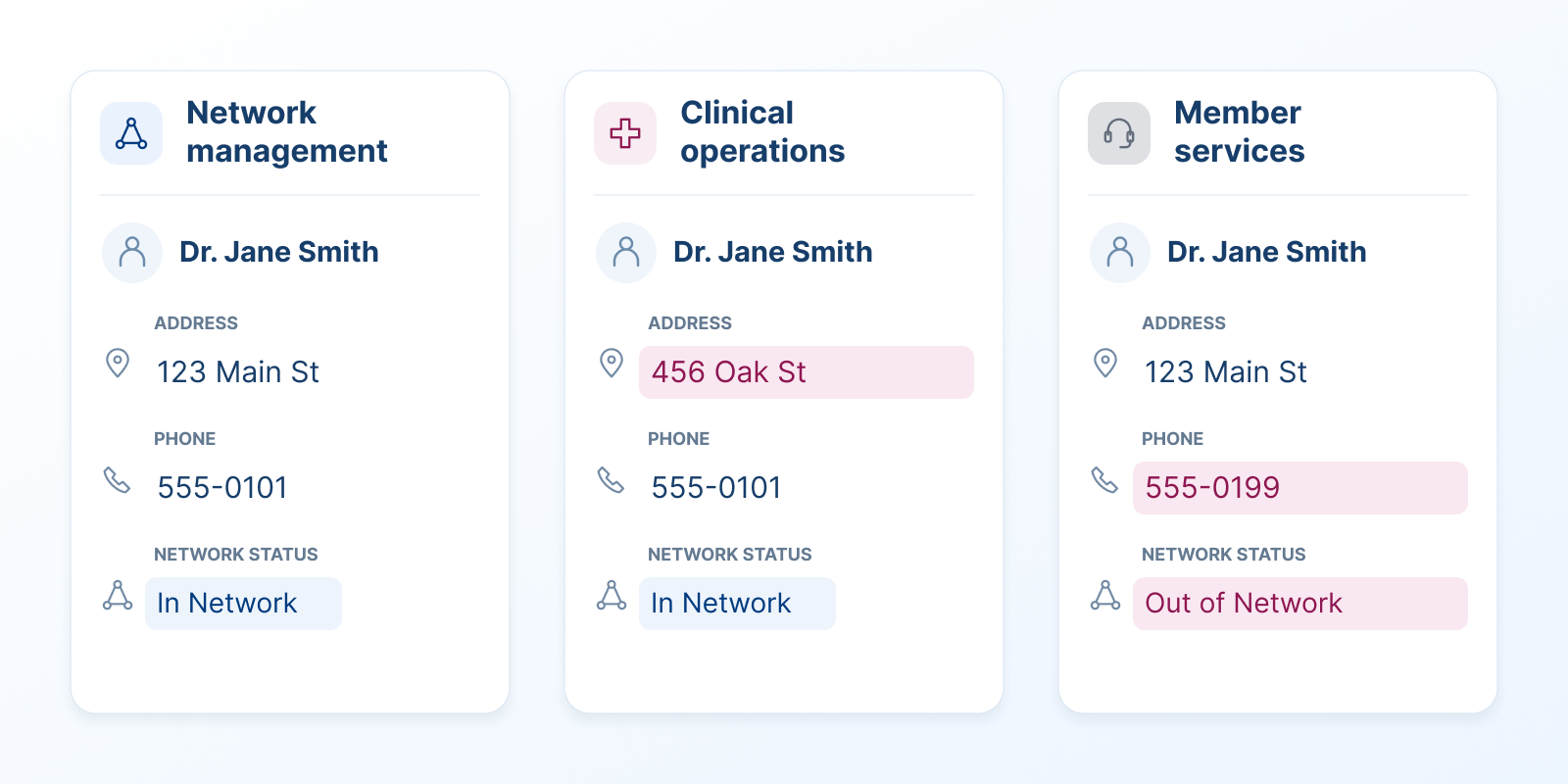
During the panel, Ryan Campbell, Strategic Partnerships at H1, described working with a health plan where multiple executives had separate requirements for essentially the same data element. Each team took the same information but applied their own interpretations because they lacked a coordinated approach to managing and using it. “You can’t have 17 sources of truth,” Campbell emphasized. “You can’t have 17 sources of truth,” Campbell emphasized. When different teams can independently modify or override the same information, it becomes difficult to establish what’s accurate and make confident decisions based on it.
The consequences extend beyond operational inefficiency. When two reports produce different answers to the same question, confidence in the information begins to erode. Teams spend time debating which numbers are correct rather than using those numbers to make decisions.
The same challenge appears in performance measurement. One health plan leader described the complexity of evaluating clinical partners, each potentially using different definitions of engagement and intervention. Without consistent standards, comparing performance and understanding which activities actually drive results becomes difficult. A shared source of truth requires more than bringing data into one place. It requires agreement on how information is defined, validated, maintained, and used across the organization.
Better Data Governance Starts with Bringing People Together
Solving data fragmentation is often framed as a technology challenge. But the panelists repeatedly emphasized that the organizational structure surrounding the data is just as important, if not more so. When departments operate independently, their technology and data environments often reflect that separation. Teams develop their own reporting processes, prioritize their own projects, and establish different methods for measuring success. Over time, those differences become embedded in the organization.
One health plan analytics leader described how their organization was working to bring teams together and improve coordination. Rather than having separate departments manage their own data and analytics independently, they established shared standards and resources while giving teams the flexibility to support their specific business needs. They also created a central team to help coordinate projects, set priorities, and ensure departments weren’t duplicating efforts.
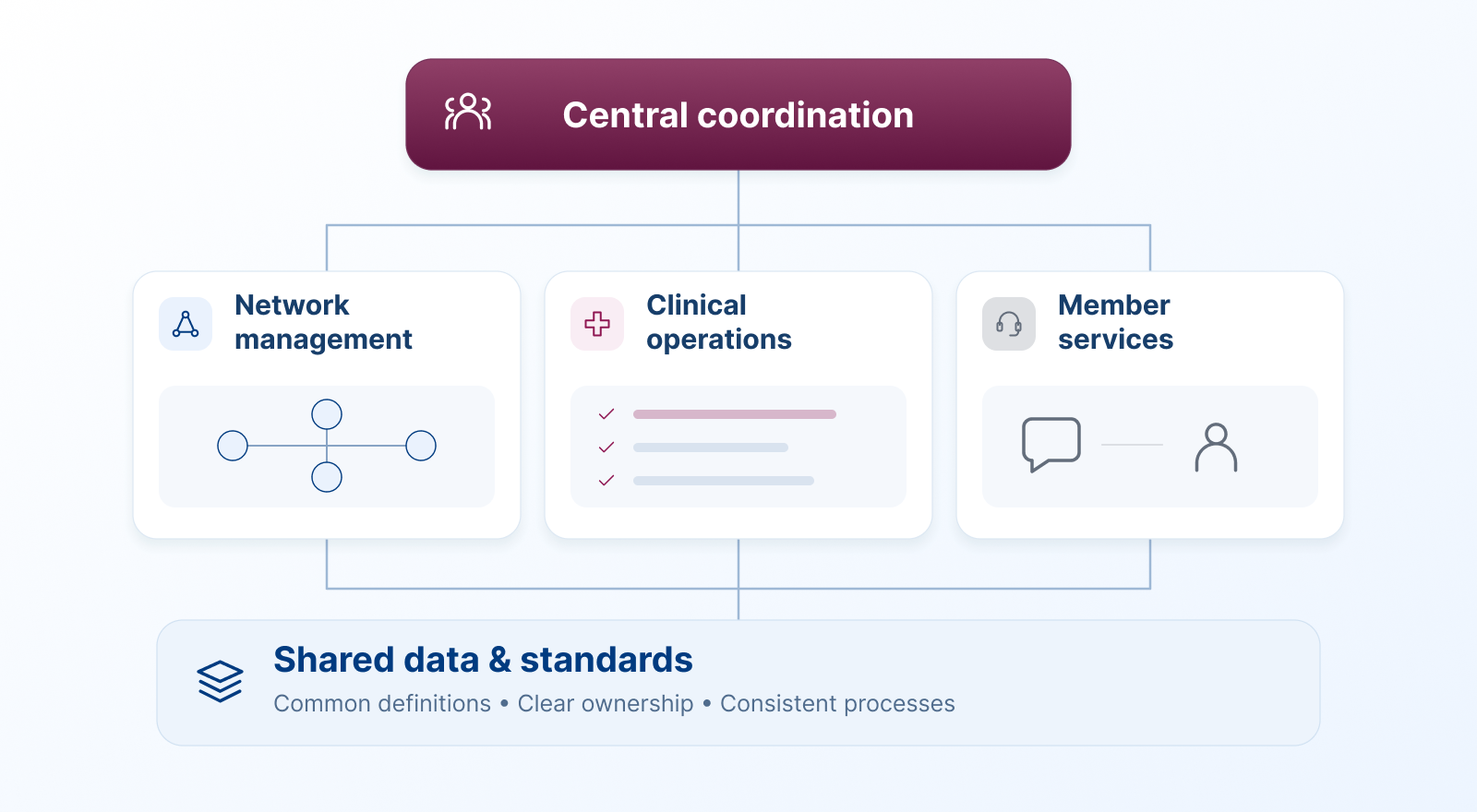
This structure allows teams to maintain expertise in their respective business functions while working from common standards and gaining visibility into each other’s priorities. Importantly, effective governance doesn’t mean every activity must be centralized. Different teams will always have distinct needs, and some flexibility is necessary to support them. The objective is to establish shared definitions, clear ownership, and consistent processes without limiting the ability of individual departments to respond to their business requirements.
That also means governance cannot be the responsibility of a single data or technology team. Panelists found that this is best done by defining what information matters, how it should be measured, and how it will be used. Clinical and operational teams must communicate their priorities, while data teams need visibility into the decisions their work is intended to support.
When those conversations happen across departments rather than within them, organizations can begin to reduce duplication, resolve conflicting information, and build greater confidence in their intelligence.
Data Is Only Valuable When It Leads to Meaningful Action
Even when organizations have reliable data and strong analytics capabilities, another challenge remains: translating insights into action. Identifying a problem doesn’t necessarily mean a health plan has the operational processes, resources, or coordination needed to address it.
For example, analytics might identify members at elevated risk of hospitalization. But that insight has limited value if care management teams cannot receive the information quickly, coordinate outreach, or connect those members with appropriate support. The challenge becomes even more complex when multiple departments are acting on information independently.
A member might receive outreach from pharmacy, care management, retention, and other teams, each responding to a different signal without understanding the broader picture.
Individually, those interactions may be well-intentioned. Collectively, they can create a fragmented and frustrating experience. A more coordinated approach requires organizations to connect intelligence across functions and determine not only what the data reveals, but also who should act, when, and how.
One health plan shared a compelling example of what this can look like in practice: by using more timely hospital admission, discharge, transfer, and utilization management information, the plan enabled care coordinators to engage with members following emergency department visits or hospitalizations rather than waiting weeks for claims data to become available. In a small sample, the percentage of members receiving follow-up visits within seven days increased from approximately 55% to 85%. The example illustrates an important distinction: The value of data isn’t simply in identifying a need. It’s in enabling an intervention while there’s still an opportunity to make a difference. Timely follow-up can help members get the support they need sooner, potentially preventing further complications or avoidable hospital visits. For health plans, that means an opportunity to improve health outcomes, strengthen quality performance, and reduce unnecessary costs.
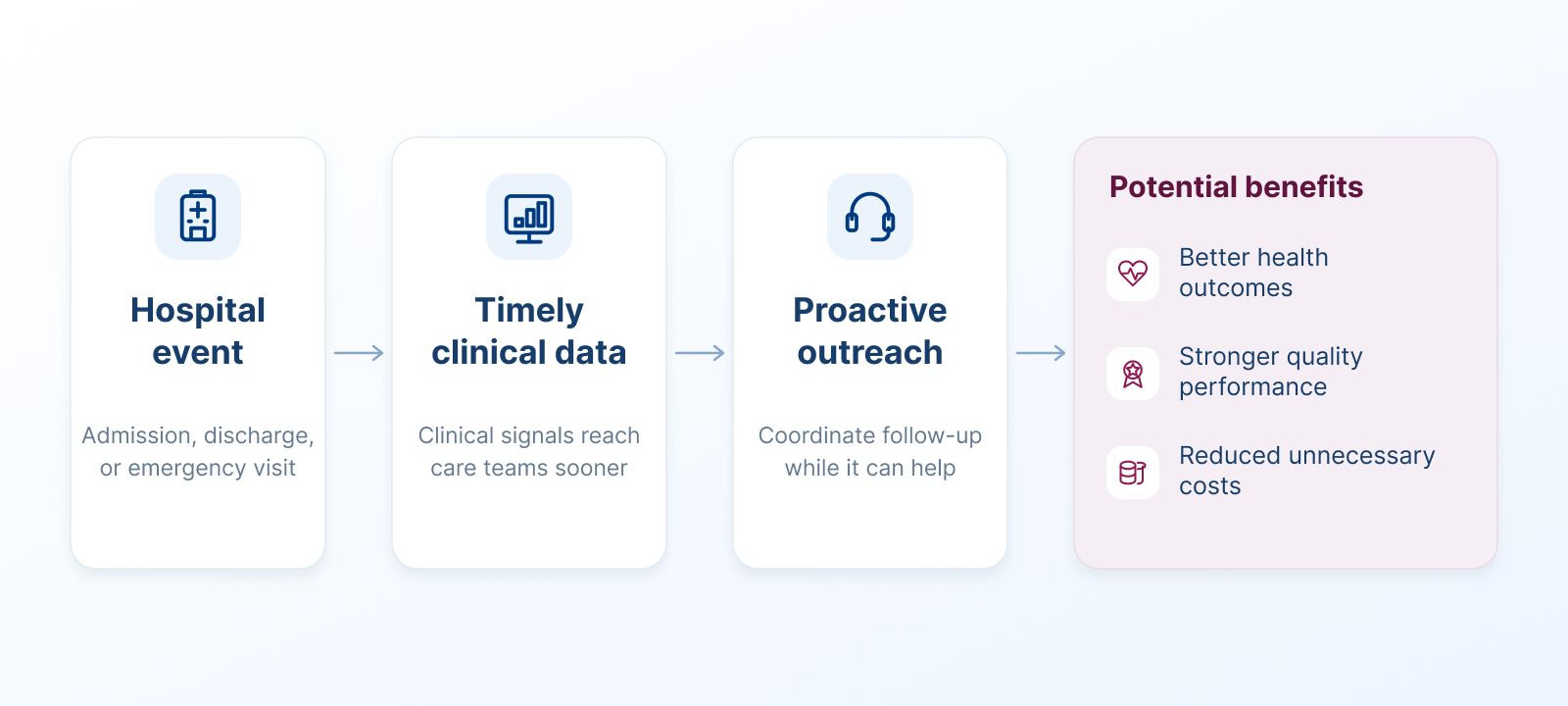
It also highlights why health plans need to think beyond traditional clinical and administrative data. Understanding a member’s circumstances may require information about social needs, family support, or interactions with other community organizations. Connecting those insights can help care teams see a more complete picture and respond in ways that address the individual’s actual needs. Ultimately, better analytics should lead to better decisions, more coordinated interventions, and more meaningful member experiences.
AI Is Changing What’s Possible, but Governance Comes First
Artificial intelligence is creating new opportunities for health plans to make information more accessible and actionable. Instead of relying on specialized analytics teams to build reports and answer every business question, organizations can increasingly use natural-language tools to explore data, identify patterns, and generate insights.
One health plan described implementing an AI-powered chatbot that allows different business functions to query shared datasets covering claims, enrollment, authorizations, risk, and other operational information. Rather than building a separate analytics solution for every department or use case, the organization is working toward a common intelligence capability that can serve multiple teams.
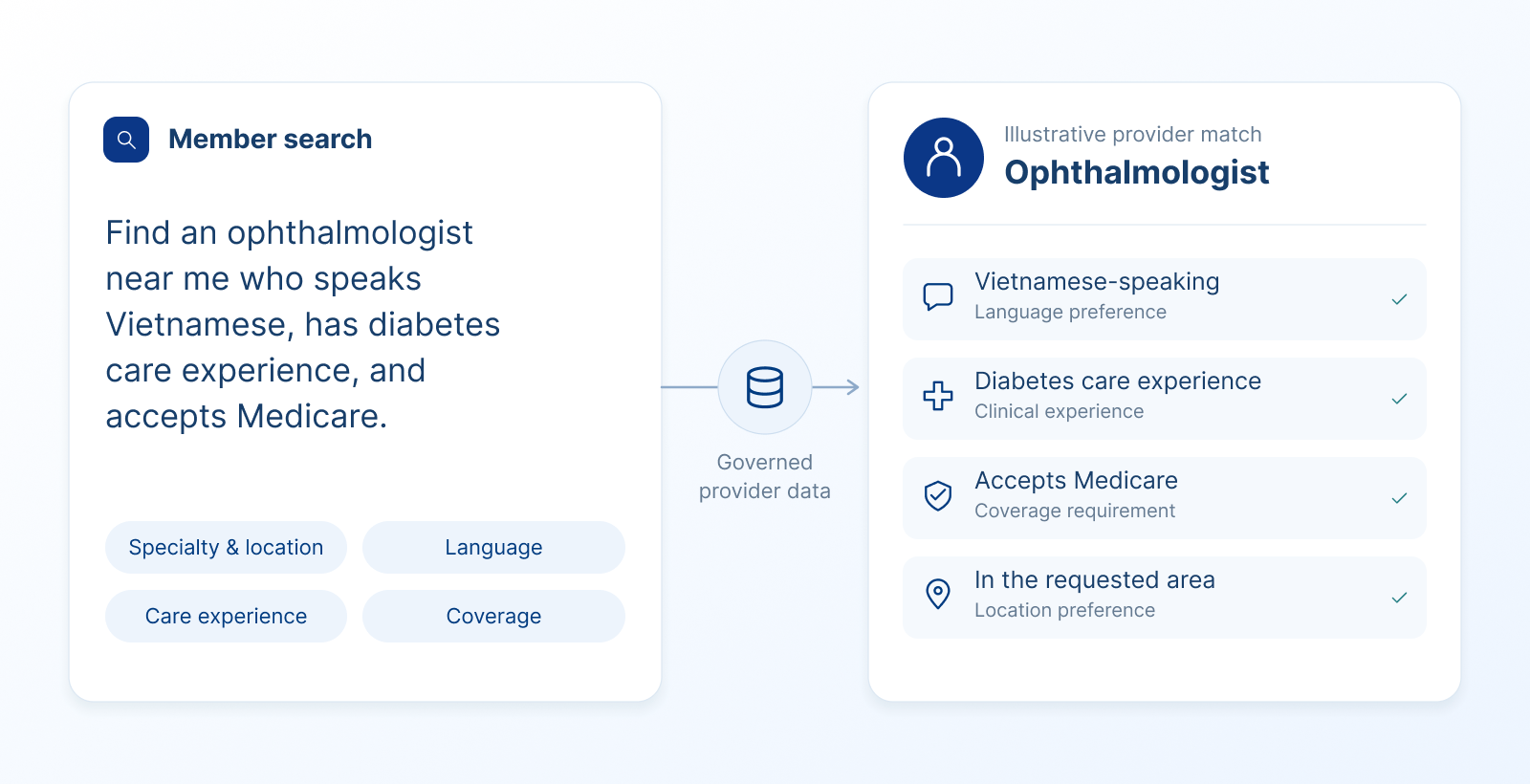
Similar opportunities are emerging in provider network intelligence. With access to accurate, connected provider information, AI-powered tools can help teams answer complex questions about network composition, accessibility, and member needs. They can also support more personalized provider search experiences, helping members identify clinicians who meet specific requirements related to specialty, language, location, insurance acceptance, and clinical expertise.
These capabilities represent a significant shift in how health plans can interact with their information. But they also reinforce the importance of getting the underlying data right. “When you have the data correct, then you can do really great things on it,” Campbell noted during the discussion.
For example, patients often want to find doctors who not only meet their clinical needs but also understand their language and cultural preferences. Yet finding a provider who meets all those criteria can be incredibly difficult, if not impossible, through traditional provider directories. With AI-powered search tools built on accurate, connected data, a member could simply ask a chatbot to find an ophthalmologist in their area who speaks Vietnamese, has experience treating patients with diabetes, and accepts Medicare. AI can bring those different pieces of information together to identify relevant providers, making it easier for members to find care that meets their unique needs.
But while AI can accelerate access to intelligence, it cannot independently resolve conflicting definitions, unclear ownership, or disconnected organizational priorities. In fact, making information easier to access may amplify existing inconsistencies if teams aren’t working from trusted, governed sources. The opportunity, then, isn’t simply to deploy more AI tools. It’s to establish the shared data environment and governance processes that allow those tools to deliver reliable, consistent intelligence across the business.
That includes starting with clearly defined use cases, establishing measurable objectives, and ensuring that AI initiatives are governed and coordinated rather than developed independently across departments. As these capabilities mature, health plans may also be able to create more continuous feedback loops, capturing insights from member interactions, provider contracting, and operational activities and feeding them back into broader organizational strategies. Instead of treating analytics as a series of isolated projects, organizations can begin building an intelligence environment that continually learns from and supports the work happening across the business.
The Next Step for Health Plans Is Organizational, Not Just Technological
The future of health plan intelligence will undoubtedly involve more advanced analytics, AI-powered tools, and new sources of information. But technology alone won’t solve the challenges that prevent organizations from using data effectively today. The health plans best positioned to capitalize on these capabilities will be those that establish clear data ownership, align teams around shared definitions, and create processes for turning intelligence into coordinated action.
That means treating data governance not as an administrative requirement, but as a strategic capability that enables greater trust, more efficient operations, and better member experiences. It also means recognizing that information becomes more valuable when it flows across organizational boundaries, helping teams understand not just their own priorities but how their decisions affect the broader business and the members they serve.
The question for health plans is no longer simply whether they have the data to make better decisions. It’s whether they’ve built the organizational alignment, governance, and processes needed to act on it.