Why Clinical Development Decisions Need to Be Connected
A clinical study moves forward through a series of connected decisions. Yet the context behind those decisions does not always move with them. Portfolio priorities inform the study design, which establishes the requirements that the country, site, and operational teams must translate into delivery plans.
Teams may receive objectives and timelines without knowing which assumptions supported them, what risks were identified earlier, or which trade-offs matter most. When new information, such as country requirements, site capacity, or patient access, challenges an early assumption, the implications may not reach every team whose decisions depend on it.
Clinical development needs continuity between decisions, from the priorities established early in planning to the evidence that emerges during execution. This blog explores how gaps in that continuity affect study plans, how new evidence can change decisions across teams, and what it takes to keep scientific, operational, and financial plans aligned.
Early Assumptions Need to Remain Visible As Plans Develop
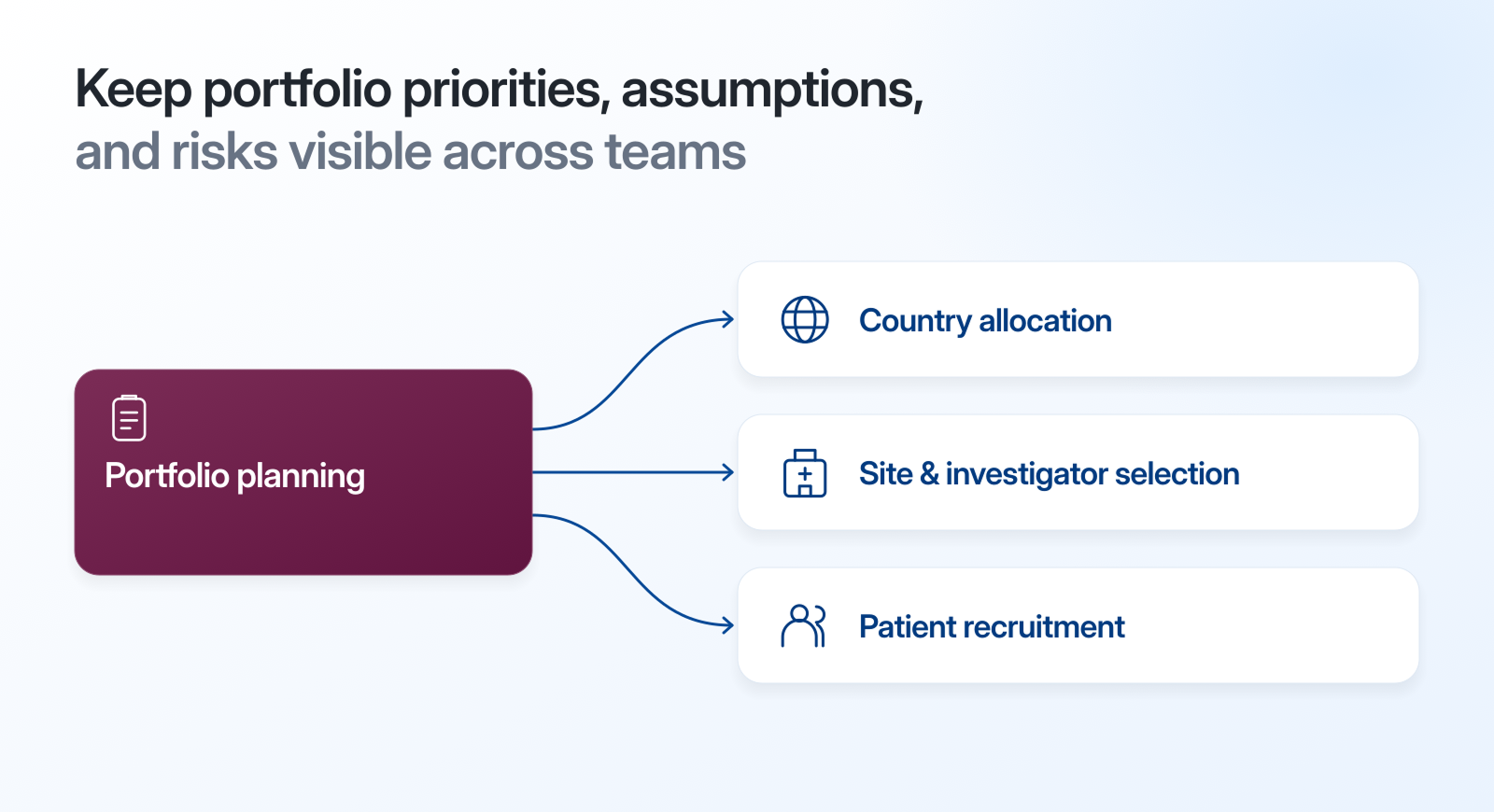
Portfolio planning evaluates clinical development opportunities against the strategic fit, patient unmet needs, indication competitive landscape, potential value & probability of success, development risks, and resource requirements to determine which assets and indications to prioritize. Clinical development planning translates those priorities and product goals into a coordinated plan for the studies needed to support it. The people making subsequent decisions need to understand the priorities and assumptions behind that plan.
By that point, teams are evaluating where to run the study, which sites and investigators can best lead it, and whether they can reach the patients who meet its eligibility criteria. They need to understand the reasoning behind the objectives that shaped the study. Which assumptions remain uncertain? What evidence informed the timeline? Which constraints reflect a strategic priority, and which are estimates that should be refined?
Do the assumptions and risks identified during portfolio planning reach the teams making country allocation decisions, site & investigator selection, and patient recruitment?
Without that visibility, teams make decisions within their focus areas, their individual experiences, without the additional context and assumptions behind the original plan. A country strategy might appear achievable on its own but depend on site availability or patient access that has not yet been confirmed.
When new evidence challenges a planning assumption, teams need to assess which decisions it affects and who needs to be involved. An issue with site readiness may be addressed within operations, while findings that challenge the protocol’s feasibility or a program’s priorities need review with clinical development or portfolio leadership.
H1’s approach to connected clinical insights brings data, intelligence, and workflows together so teams can evaluate subsequent choices against the evidence informing earlier decisions. The purpose is to help teams understand what a plan depends on and when those dependencies need another look.
New Evidence Should Update the Decisions That Depend on It
Study plans rely on assumptions about patient availability, site capabilities, and timelines. As country and site input tests those assumptions, teams need to carry the findings into the design and operational decisions that depend on them.
Consider an illustrative study enrolling patients with a body mass index (BMI) of at least 30 and excluding those with prior GLP-1 treatment use. Teams build an initial recruitment forecast and timeline around that population.
Country review then reveals that prior GLP-1 use limits eligibility in some markets, while the BMI threshold excludes many potential participants in Japan. These findings challenge the original forecast and require clinical development and operations to assess the options together.
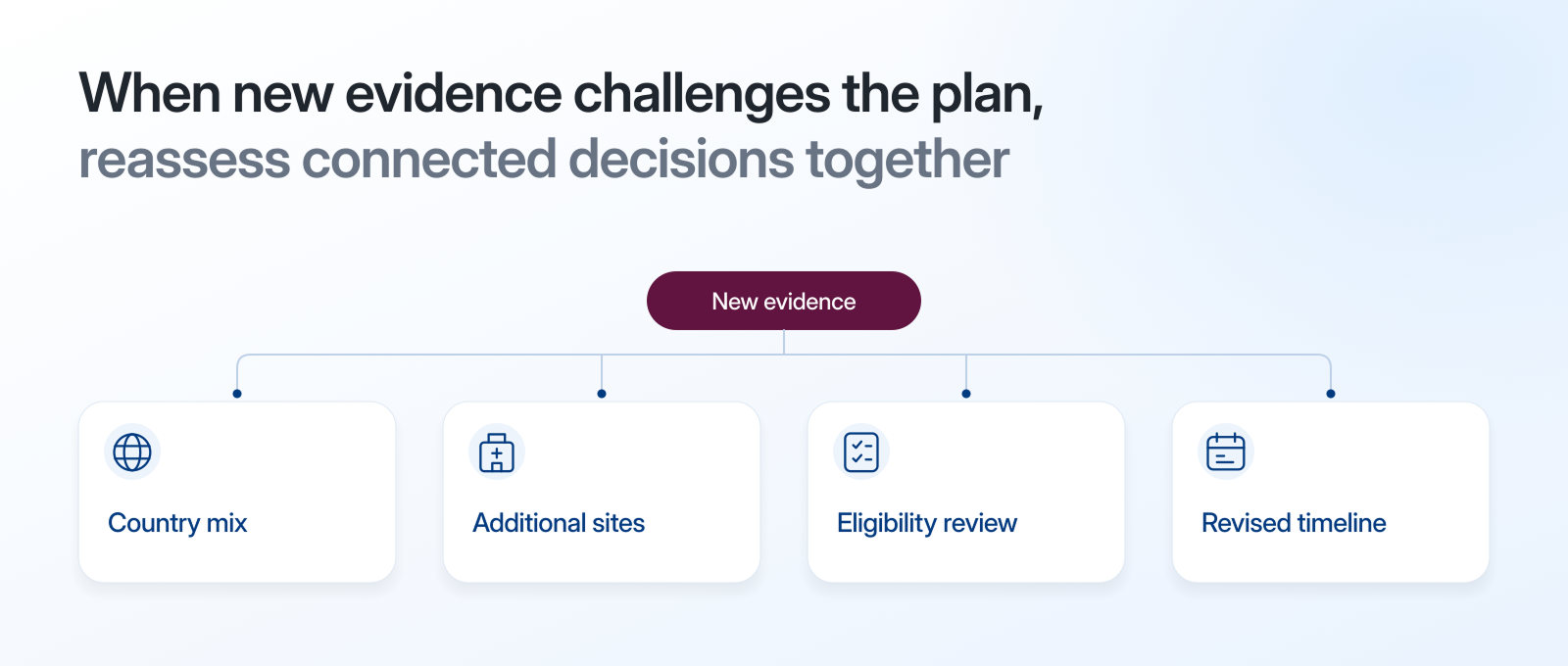
Teams could evaluate a different country mix, identify additional sites, assess whether an eligibility requirement warrants review, or accept a revised timeline. Each option has implications beyond recruitment: changing countries affects operational preparation, adding sites requires startup work and resources, and revisiting eligibility criteria requires scientific and regulatory assessment. Those choices also need to be reflected in the study’s milestones and budget.
When new evidence challenges a planning assumption, teams need to assess which decisions are affected and what needs to change. That review should connect study design, country and site plans, timelines, and budget so teams can evaluate the implications together.
Although recruitment reveals the gap in this example, the consequences extend across the clinical development plan. When the underlying workflows are disconnected, keeping plans aligned depends on repeated document handoffs and manual updates across teams.
A connected workflow keeps earlier evidence and decision rationale visible as the plan develops. It also brings country, site, and execution findings back to planning teams, so changes can be evaluated together and reflected in the affected study plans and budgets.
Individual Study Choices Can Create Pressure Across the Portfolio
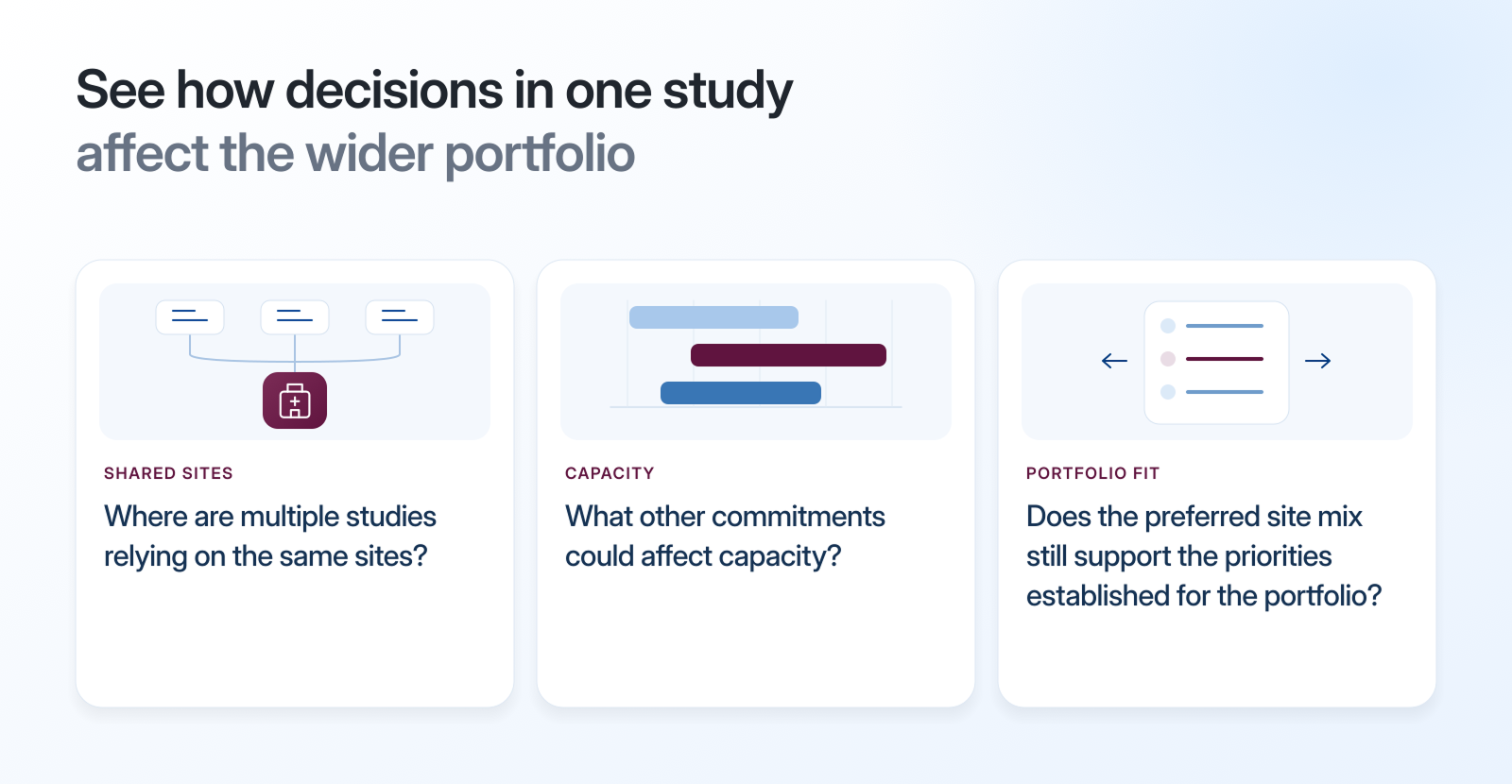
Connections between decisions also extend across studies and indications. Consider what happens when teams repeatedly select the same preferred investigators and sites. For each study team, those sites and investigators may fit the study criteria well and have relevant experience, but viewed across the portfolio, those choices can create competing demands across different trials.
A site’s fit for one study does not establish its capacity to support several studies at once. Investigators, research staff, facilities, and access to similar patient populations may be shared. If each team evaluates sites and investigators independently, the combined commitments can remain difficult to see.
That wider view changes the questions teams need to ask. Where are multiple studies relying on the same sites? What other commitments could affect capacity? Does the preferred site mix still support the priorities established for the portfolio?
The response may involve broadening the site network, revisiting planned commitments, or reconsidering timing. Those choices involve trade-offs. Additional sites can increase startup work and cost. Changes to timing can affect other program milestones. Retaining the original plan may require stronger evidence that the capacity assumptions hold.
Connected planning helps teams see shared site demands and avoid committing to capacity that cannot support all their studies.
Execution Findings Need to Reach the Teams That Can Address Them
Once a study moves into startup and execution, actual performance provides evidence about the assumptions used to build the plan.
Contracting and site readiness affect when sites can begin enrolling. Performance at active sites provides a clearer view of delivery. Comparing those observations with the original expectations helps teams identify where the plan needs attention. But recognizing a deviation does not automatically explain its cause.
Clinical operations and clinical development need to assess whether delays stem from operational challenges or the study’s protocol requirements. If study progress is affected by requirements in the schedule of activities, an operational team may see the consequences without having the authority or scientific context to evaluate the underlying requirements.
For example, if frequent visits discourage participation and slow enrollment, adding sites may leave the barrier unresolved. Clinical development and operations need to evaluate whether the visit schedule can be adjusted while preserving the evidence the study needs.
Any agreed change must be reflected in site activities, enrollment forecasts, timelines, and budgets. Bringing those findings back into planning also helps teams build more realistic assumptions for future studies and less burdensome trials for patients and caregivers.
Connected Decisions Require Clear Responsibility
Connected data and AI can help teams identify risks and compare responses, but a designated business lead needs to bring the relevant functions together to evaluate the options against scientific goals, operational constraints, and portfolio priorities.
Clear ownership helps ensure that agreed changes are reflected across study plans, forecasts, and budgets, with success measured by the clinical and operational outcomes those decisions support.
Keep Decisions Connected from Planning Through Execution with H1
H1 connects clinical intelligence and workflows to help teams bring planning evidence and site feedback into the same decision process. That connection supports a continuous review of what was assumed, what has changed, and what needs to happen next.
A clinical plan becomes more useful when its reasoning stays visible as the study develops. Keeping that context connected helps teams carry portfolio priorities into study decisions, reflect new evidence in operational and financial plans, and bring execution findings back to the people shaping future studies.
Request a demo to explore how H1 supports connected clinical planning and execution.