Beyond the AI Pilot: Building the Foundation for Clinical Trial Impact
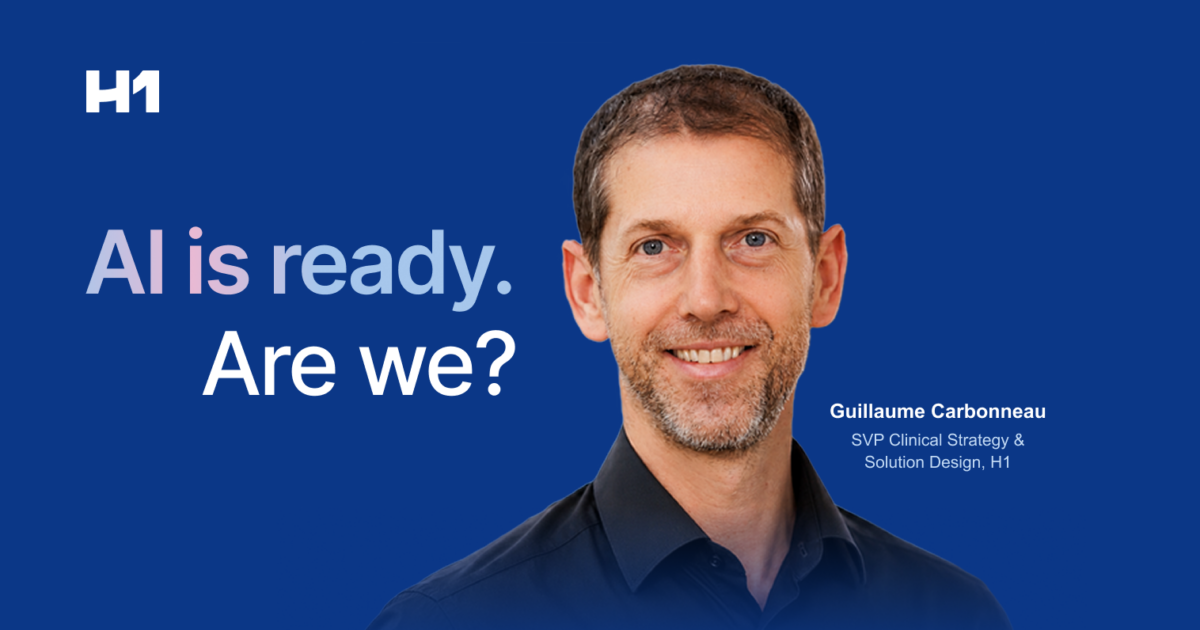
As we witness AI solutions being deployed into clinical trials and in drug development in general, an important question remains: is it actually making a difference?
That question was at the center of a recent panel discussion that brought together experts from across the clinical research ecosystem, including sponsors, sites, patient recruitment organizations, technology companies, and clinical researchers.
The conversation highlighted an industry that sees enormous potential in AI, but is still working through what it takes to translate that potential into practical, scalable impact.
The Opportunity: Less Manual Work, Better Decisions
From the sponsor and site perspectives, some of the clearest opportunities for AI are centered on reducing the burden surrounding clinical trials. Panelists discussed applications ranging from identifying eligible patients and accelerating pre-screening to automating data transfer and helping research teams spend less time manually reviewing patient records.
Across these examples, the goal isn’t simply to introduce more technology into clinical research. It is to remove work that slows sites down and give teams more time to focus on patients.
For Guillaume Carbonneau, SVP Clinical Strategy & Solution Design of H1, the opportunity extends even further upstream. After more than two decades working in top pharma companies, he sees AI as an opportunity to fundamentally improve how clinical development organizations use data to make decisions. “Beyond the technology, it’s all about understanding the data and how you actually convey the data the right way to the users.”
The challenge is familiar: clinical development organizations have enormous amounts of information at their disposal, but that information is often siloed across systems, teams, and workflows. At the same time, the fundamental questions organizations need to answer haven’t changed. “We all have the same goal, right? Right patients, right site, right investigators.”
What has changed is the industry’s ability to understand the business problem, bring disparate information together, understand it in context, and use it to inform decisions throughout clinical development.
The Technology Is Ready for Organizations Ready to Evolve Alongside It
Despite the promise, the panel was equally clear about the challenges. AI implementations have to contend with interoperability issues, privacy and governance requirements, differences in how organizations define and measure clinical-trial activities, and concerns about bias, validation, and trust. And not every pilot will, or should, become an enterprise-wide solution.
Guillaume argued that the biggest barrier to scaling AI may no longer be the technology itself.
“It’s definitely not the technology.” Today’s tools can process information at a scale that would previously have been incapable. But deploying them effectively across a large clinical development organization requires something harder: leadership.
Teams need agreement around the outcomes they’re trying to achieve, sponsorship willing to support new ways of working, and a culture that can connect initiatives across organizational silos.
“I think it’s a problem of alignment towards the objective with the true end in mind. So, we want to benefit the patients and ensure patients have the right experience. We want to be fast. We want to get the right sites so we don’t create frustration all across the process. All these require leadership and cultural shift.”
In other words, AI can move faster than the organizations adopting it. The challenge is making sure operating models, data practices, and decision-making processes evolve alongside the technology.
Context Is What Turns Data into Something Useful
Clinical trial data is extraordinarily complex. Even seemingly straightforward concepts can be defined differently across sponsors, studies, and systems. For AI to interpret that information reliably, simply having access to more data isn’t enough.
Guillaume pointed to the advancement in contextual AI, large language models, and ontology models that can help organizations interpret complex information, understand the deep meaning, intent and outcome. H1 has been pioneering to build AI models that can a) break down 1,000,000 clinical trial data into “nodes” to extract objectives, endpoints, inclusion/exclusion criteria, schedules of activities and b) benchmark to generate optimized study designs. That creates opportunities not only to analyze what has happened in previous studies, but to connect information that historically has been difficult to evaluate together.
And getting those decisions right upstream matters because complexity doesn’t stay upstream.
“If we don’t clean our protocol at the beginning, we send all that mess to the next, to the next…to the site, to the patient, and the caregivers.”
AI therefore has the potential to do more than automate individual tasks. Applied effectively, it can help clinical development teams identify relationships across complex information earlier, make more informed decisions, and prevent unnecessary complexity from cascading downstream. None of that happens without trust.
Trust Starts with the Data Foundation
The panel repeatedly returned to the need for appropriate governance, validation, human oversight, and evidence that AI is actually improving the outcomes that matter to sites, sponsors, and patients.
For Guillaume, accuracy (and therefore trust) starts before the model itself. “There’s no good outcome of any AI model today if the foundation is not there.” That means doing the less visible work: creating shared ontologies, harmonizing semantics, establishing the right data pipeline, and giving models enough context to interpret information accurately.
It’s an important distinction at a moment when much of the conversation around AI focuses on the sophistication of the technology. The model may be powerful, but the quality and context of the information underneath it ultimately determine how useful its outputs can be.
From Promising to Practical
Asked at the end of the session to describe the future of AI in one word, Guillaume chose “confident.” But that confidence doesn’t mean overlooking the challenges. If anything, the discussion made clear how much work remains around governance, interoperability, organizational alignment, and trust.
But it also showed how the conversation is evolving. The question is becoming less about whether AI belongs in clinical development and more about where it can deliver meaningful value, and what organizations need to put in place to capture it. The organizations that make progress won’t simply be the ones with the most advanced AI. They’ll be the ones that connect the technology with high-quality data, meaningful context, and the people and processes responsible for turning insights into better decisions.
And ultimately, those decisions should lead back to the same goal Guillaume identified at the start: finding the right patients, sites, and investigators. And creating a better clinical trial experience for everyone involved.