Belgium Drug Development Spotlight
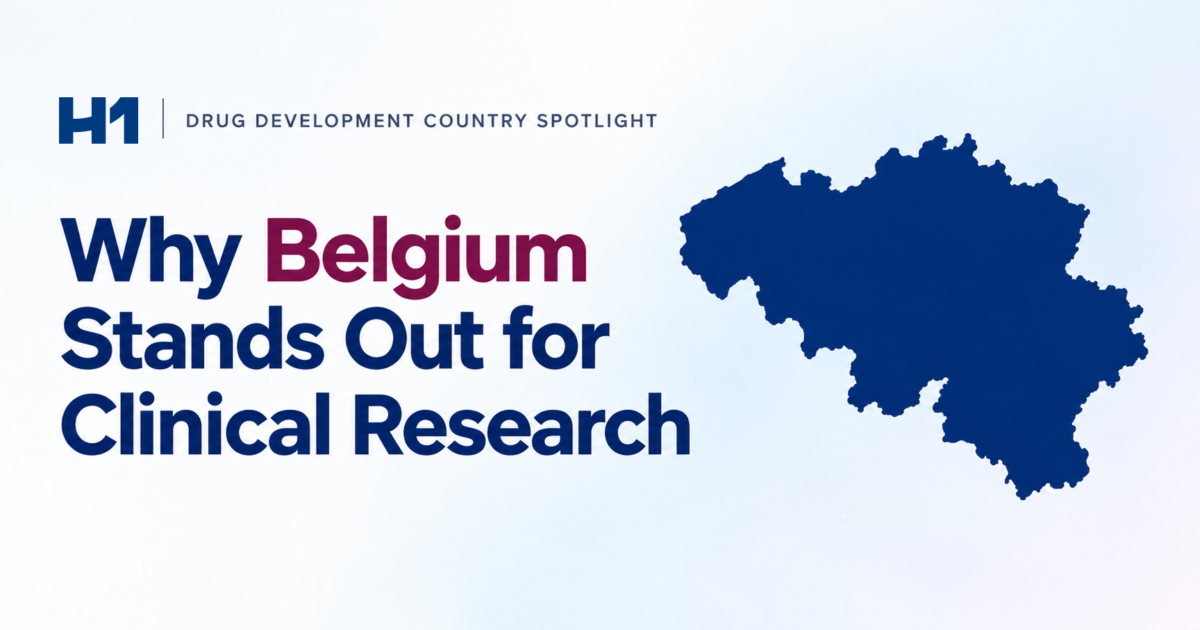
Belgium represents approximately 2.6% of the EU population, yet it ranked second among the European countries analyzed for clinical trial authorizations per capita over the past five years, according to Deloitte and pharma.be.
To take a closer look at Belgium’s clinical research landscape, we analyzed H1’s clinical trial data from the past five years. During that period, 4.2K clinical trials with at least one site in Belgium were initiated. This spotlight explores where that activity is concentrated across therapeutic areas and development phases, what makes those findings meaningful, and what sponsors should consider when evaluating Belgium for a future study.
Belgium’s Most Active Therapeutic Areas
Belgium’s position is supported by a well-established clinical research ecosystem that brings together academic research centers, university hospitals, experienced investigators, biopharmaceutical companies, and regulatory expertise.
Among clinical trials that started in Belgium over the past five years and had at least one site in Belgium, oncology accounted for the largest share at 20.2%. Nervous-system research represented 11.5%, followed by cardiovascular research at 10.0%.
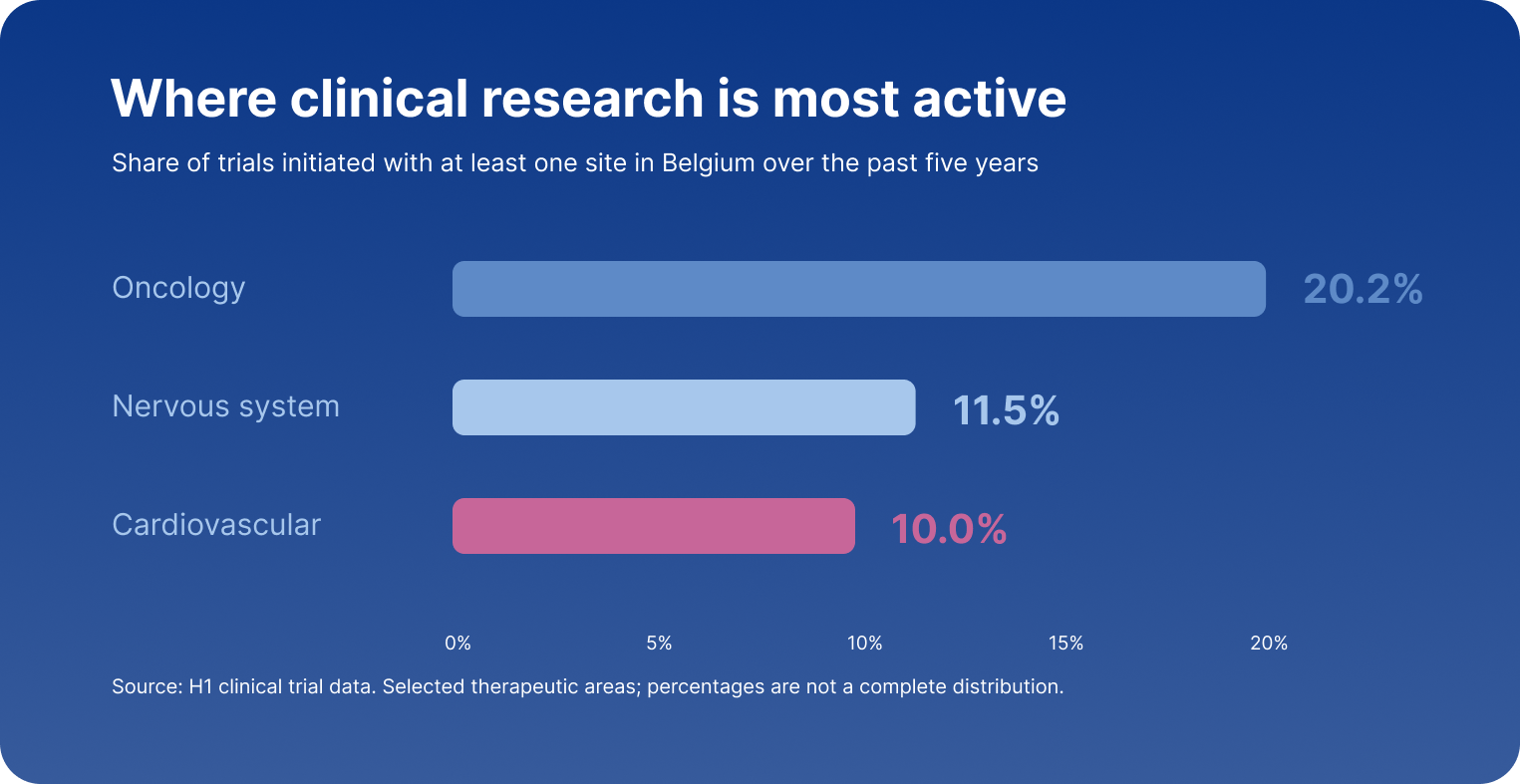
Oncology’s leading position reflects a broader environment shaped by both patient need and specialized research infrastructure. Belgium’s cancer incidence is higher than the EU average, creating an ongoing need for new approaches to prevention, diagnosis, and treatment.
The prominence of nervous-system and cardiovascular studies also reflects significant areas of patient need in Belgium. Neurological disorders are among the country’s leading causes of health loss due to disability, while cardiovascular disease affects more than one million people.
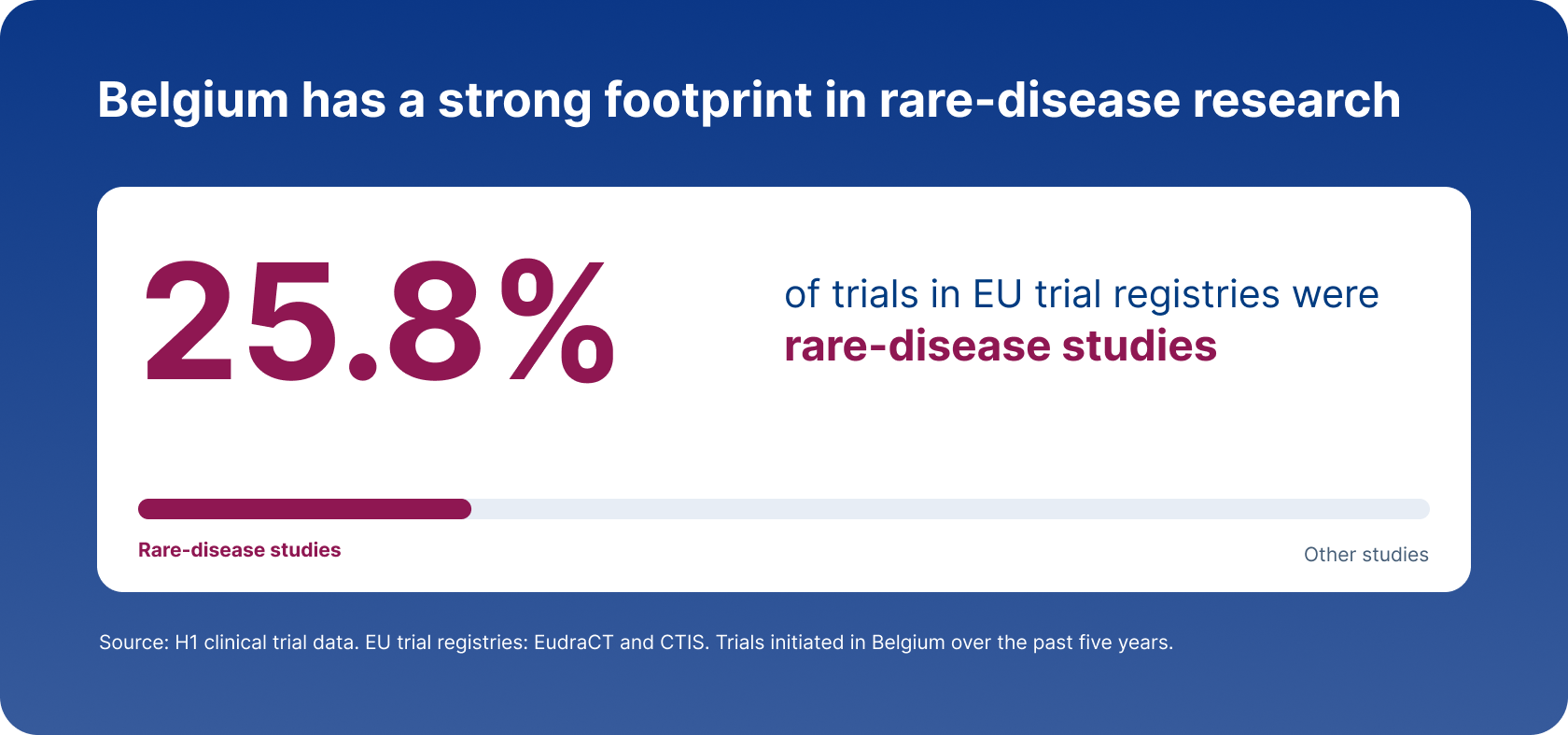
Rare-disease research is another notable part of Belgium’s clinical-trial landscape. Among trials initiated in Belgium over the past five years and registered in EU trial registries (EudraCT or CTIS), 25.8% were identified as rare-disease studies. These studies often require specialized expertise and smaller, more specific patient populations, making relevant investigator and site experience an important consideration for sponsors.
For sponsors, these findings point to a broad base of specialized investigators and research sites. Understanding where that expertise intersects with the right patients, site capabilities, and study experience can help determine where Belgium offers the strongest fit for a specific protocol.
Supporting Studies from Early Development Through Phase 3
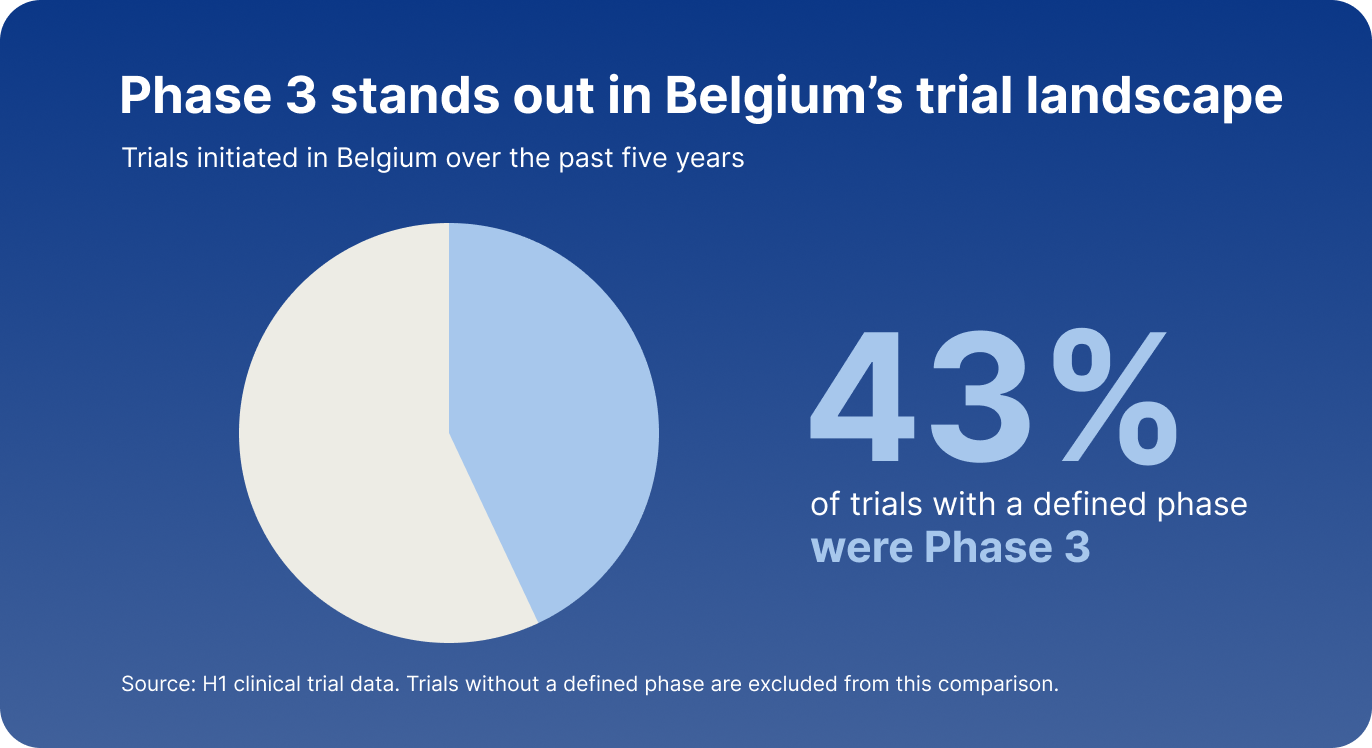
Among trials that started in Belgium over the past five years, Phase 3 accounted for the largest share of any defined drug-development phase, representing 43%. Phase 3 studies typically require experienced investigators, established research sites, and access to larger patient populations. Belgium’s concentration of late-stage activity points to an ecosystem with experience supporting complex studies as treatments move closer to regulatory review and potential approval.
Belgium is also shortening the regulatory path for certain earlier-stage studies. Beginning in 2026, initial applications for qualifying Phase 1, Phase 1/2, and Phase 2 trials conducted only in Belgium can be assessed within a maximum of 20 days when no additional information is required, roughly half the previous review timeline. The FAMHP has also launched a pilot to accelerate eligible multinational early-phase trials when Belgium leads the assessment.
Together, Belgium’s late-stage trial experience and efforts to accelerate selected early-stage studies strengthen its relevance across clinical development.
Could Belgium Be a Fit for Your Next Study?
Belgium’s trial activity, therapeutic-area strengths, and late-stage research experience make it a compelling market for sponsors to consider. Determining its fit for a specific protocol requires a closer look at patient populations, investigator expertise, site capabilities, historical performance, and competing trials.
With 60K physician profiles and data on 14.6K clinical trials, H1 Clinical gives feasibility and clinical operations teams greater visibility into the investigators, specialties, institutions, and trial activity across the country to support more informed country- and site-selection decisions.
Connect with our team to explore and find the right sites and PIs for your study.