The Next Generation of AI-Powered Clinical Development
H1 and Novo Nordisk Partnership Announcement
I am excited today to share our partnership with Novo Nordisk as our design partner for Study Universe. Just one of many announcements in the near future as the industry adopts solutions like Study Universe to make AI work for clinical trials.
 Regardless of where in the industry we try to impact humanity and bring life-saving drugs to market, it still takes too long. The statistics on percent of trials that fail to meet their original timelines, length of time it takes to meet enrollment targets, and the number of principal investigators that never enroll a single patient is not sustainable. Delays and failures in trial planning and execution have a direct impact on how long it takes to bring therapies to those that need them.
This is not a problem that AI can just solve. It’s a data problem at its core. Most teams are sitting on a mountain of data, CTMS, EDC, CRM, finance systems, spreadsheets, slide decks, it’s all there. The question then is how do we turn all of that into something AI can actually use for trial planning, operations, and execution at scale?
More importantly what if the data isn’t right, if there are source conflicts or fields are missing? It’ll rank the wrong sites, over‑promise enrollment, or miss key risks. These are the conversations we had with Novo Nordisk and what we are partnering to solve for with Study Universe.
What is Study Universe?
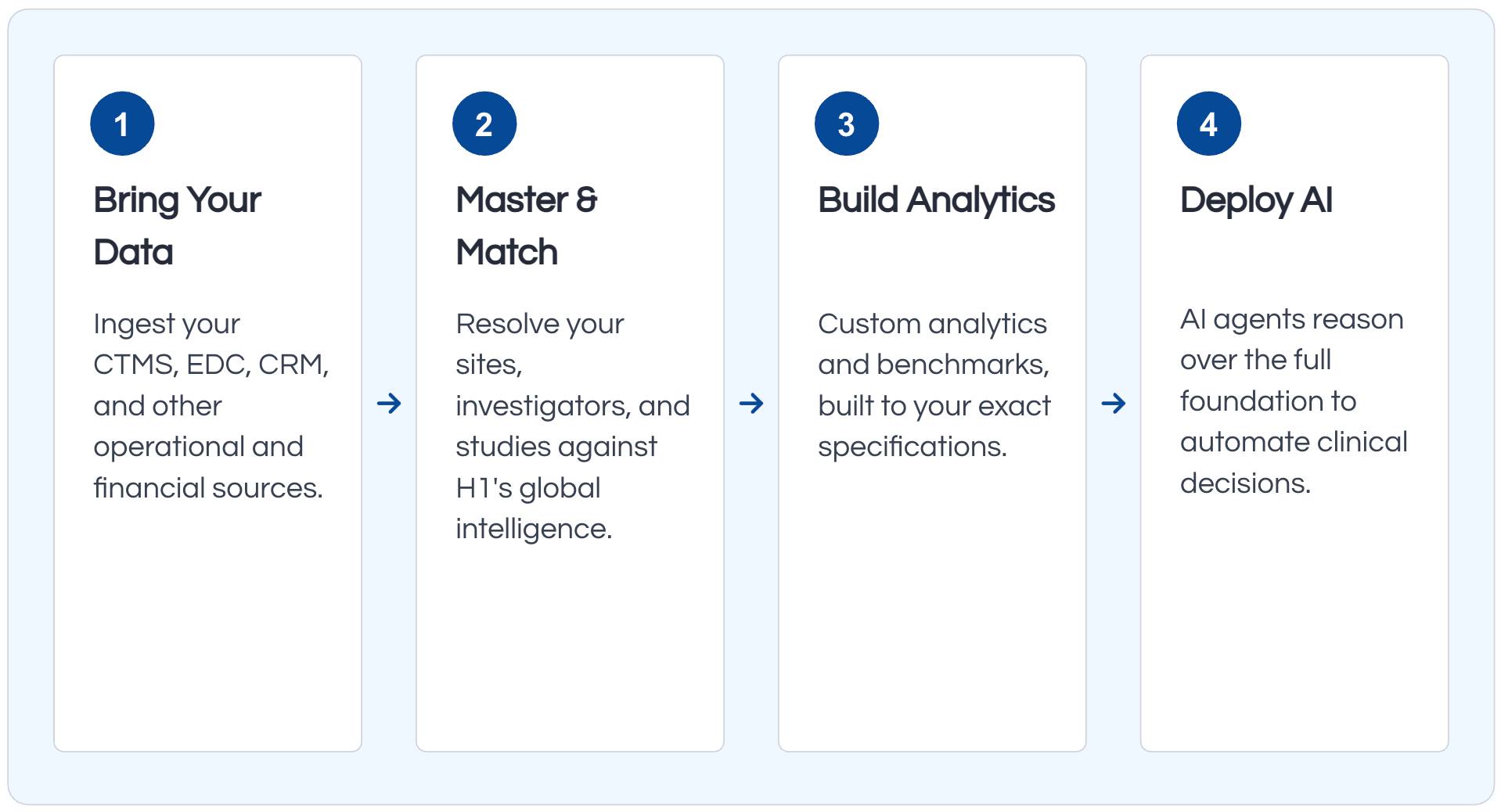
Study Universe gives clinical teams the building blocks they need with data, algorithms, AI, and analytics to marry study design, operations, and execution. In order to build a product that can do this work, we need several solution layers and a level flexibility in each that is now available with the adoption of AI:
AI has become a powerful tool in our industry, but the real opportunity is in how we use it. With Study Universe, we’re using AI to make sense of the data pharma companies already have, connect it to trusted signals about sites and PIs, and turn it into clearer, faster decisions. That means fewer blind spots in planning, fewer avoidable delays in execution, and a better shot at getting new therapies to patients when they need them.